Buy morefollowers.eu ?
We are moving the project
morefollowers.eu .
Are you interested in purchasing the domain
morefollowers.eu ?
domain@kv-gmbh.de · 0541-91531010
Buy morefollowers.eu ?
Are copper pipes with stainless steel connections safe?
Copper pipes with stainless steel connections are generally safe for use in plumbing systems. Stainless steel is a durable and corrosion-resistant material, making it a suitable choice for connecting copper pipes. However, it is important to ensure that the connections are properly installed and sealed to prevent any potential leaks or issues. Additionally, it is always recommended to consult with a professional plumber to ensure that the materials and connections used are appropriate for the specific plumbing application. **
What is the cross-sectional area of the copper wire he has?
The cross-sectional area of the copper wire can be calculated using the formula for the area of a circle, which is πr^2, where r is the radius of the wire. Since the wire has a diameter of 0.5 mm, the radius would be half of that, which is 0.25 mm or 0.00025 meters. Plugging this value into the formula, the cross-sectional area of the copper wire is approximately 1.963 x 10^-7 square meters. **


Similar search terms for KALATY-Copper-Horizon-Area
Top-Angebote
Products related to KALATY-Copper-Horizon-Area:

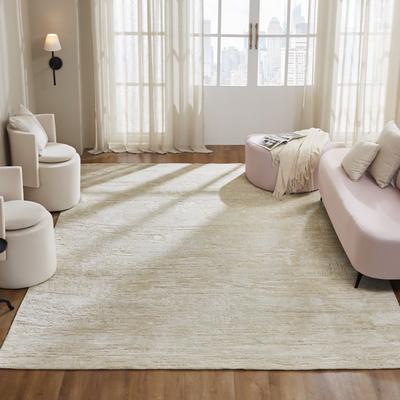


-
How do you calculate the cross-sectional area of a copper pipe?
To calculate the cross-sectional area of a copper pipe, you can use the formula for the area of a circle: A = πr^2, where A is the area and r is the radius of the pipe. First, measure the diameter of the copper pipe using a ruler or calipers. Then, divide the diameter by 2 to get the radius. Finally, plug the radius into the formula A = πr^2 to calculate the cross-sectional area of the copper pipe. **
-
Are the screw connections on the copper pipe leaking?
To determine if the screw connections on the copper pipe are leaking, you can perform a visual inspection for any signs of water dripping or pooling around the connections. Additionally, you can use a dry paper towel to gently dab around the connections to check for any moisture. If there is evidence of water leakage, it may indicate that the screw connections are not properly sealed and may need to be tightened or resealed with plumbing tape or sealant. It's important to address any leaks promptly to prevent water damage and ensure the proper functioning of the plumbing system. **
-
How high is the radiation exposure from copper in an apartment?
The radiation exposure from copper in an apartment is very low and not a cause for concern. Copper itself is not a radioactive material and does not emit harmful radiation. However, if there are any radioactive materials present in the apartment, such as radon gas or contaminated building materials, those could pose a radiation risk. It's important to have a professional assess the apartment for any potential radiation hazards and take appropriate measures to address them. **
-
How much does a 3mm thick copper sheet with an area of 4m2 weigh?
To calculate the weight of the copper sheet, we can use the formula: weight = density x volume. The density of copper is approximately 8,960 kg/m3. The volume of the copper sheet can be calculated by multiplying the thickness (3mm or 0.003m) by the area (4m2), which equals 0.012m3. Therefore, the weight of the copper sheet is 8,960 kg/m3 x 0.012m3 = 107.52 kg. **


How do you stir copper sulfate for crystal growth?
To stir copper sulfate for crystal growth, you can use a glass stirring rod or a plastic spoon to gently agitate the solution. It is important to stir the copper sulfate solution slowly and carefully to avoid introducing air bubbles, which can interfere with crystal formation. Stirring helps to evenly distribute the copper sulfate in the solution and promotes the nucleation and growth of crystals. It is important to stir the solution until all the copper sulfate is dissolved before allowing the crystals to grow. **
What is lighter, copper or copper oxide?
Copper is lighter than copper oxide. This is because copper oxide is a compound formed by the combination of copper and oxygen, which increases its overall mass compared to pure copper. Therefore, in terms of weight, copper is lighter than copper oxide. **
Top-Angebote
Products related to KALATY-Copper-Horizon-Area:
-
Are copper pipes with stainless steel connections safe?
Copper pipes with stainless steel connections are generally safe for use in plumbing systems. Stainless steel is a durable and corrosion-resistant material, making it a suitable choice for connecting copper pipes. However, it is important to ensure that the connections are properly installed and sealed to prevent any potential leaks or issues. Additionally, it is always recommended to consult with a professional plumber to ensure that the materials and connections used are appropriate for the specific plumbing application. **
-
What is the cross-sectional area of the copper wire he has?
The cross-sectional area of the copper wire can be calculated using the formula for the area of a circle, which is πr^2, where r is the radius of the wire. Since the wire has a diameter of 0.5 mm, the radius would be half of that, which is 0.25 mm or 0.00025 meters. Plugging this value into the formula, the cross-sectional area of the copper wire is approximately 1.963 x 10^-7 square meters. **
-
How do you calculate the cross-sectional area of a copper pipe?
To calculate the cross-sectional area of a copper pipe, you can use the formula for the area of a circle: A = πr^2, where A is the area and r is the radius of the pipe. First, measure the diameter of the copper pipe using a ruler or calipers. Then, divide the diameter by 2 to get the radius. Finally, plug the radius into the formula A = πr^2 to calculate the cross-sectional area of the copper pipe. **
-
Are the screw connections on the copper pipe leaking?
To determine if the screw connections on the copper pipe are leaking, you can perform a visual inspection for any signs of water dripping or pooling around the connections. Additionally, you can use a dry paper towel to gently dab around the connections to check for any moisture. If there is evidence of water leakage, it may indicate that the screw connections are not properly sealed and may need to be tightened or resealed with plumbing tape or sealant. It's important to address any leaks promptly to prevent water damage and ensure the proper functioning of the plumbing system. **
Similar search terms for KALATY-Copper-Horizon-Area
-
How high is the radiation exposure from copper in an apartment?
The radiation exposure from copper in an apartment is very low and not a cause for concern. Copper itself is not a radioactive material and does not emit harmful radiation. However, if there are any radioactive materials present in the apartment, such as radon gas or contaminated building materials, those could pose a radiation risk. It's important to have a professional assess the apartment for any potential radiation hazards and take appropriate measures to address them. **
-
How much does a 3mm thick copper sheet with an area of 4m2 weigh?
To calculate the weight of the copper sheet, we can use the formula: weight = density x volume. The density of copper is approximately 8,960 kg/m3. The volume of the copper sheet can be calculated by multiplying the thickness (3mm or 0.003m) by the area (4m2), which equals 0.012m3. Therefore, the weight of the copper sheet is 8,960 kg/m3 x 0.012m3 = 107.52 kg. **
-
How do you stir copper sulfate for crystal growth?
To stir copper sulfate for crystal growth, you can use a glass stirring rod or a plastic spoon to gently agitate the solution. It is important to stir the copper sulfate solution slowly and carefully to avoid introducing air bubbles, which can interfere with crystal formation. Stirring helps to evenly distribute the copper sulfate in the solution and promotes the nucleation and growth of crystals. It is important to stir the solution until all the copper sulfate is dissolved before allowing the crystals to grow. **
-
What is lighter, copper or copper oxide?
Copper is lighter than copper oxide. This is because copper oxide is a compound formed by the combination of copper and oxygen, which increases its overall mass compared to pure copper. Therefore, in terms of weight, copper is lighter than copper oxide. **
* All prices are inclusive of VAT and, if applicable, plus shipping costs. The offer information is based on the details provided by the respective shop and is updated through automated processes. Real-time updates do not occur, so deviations can occur in individual cases. ** Note: Parts of this content were created by AI.